


The Dual Threat of Floods and Droughts / Climate-Resilient Agriculture NGO in Bihar
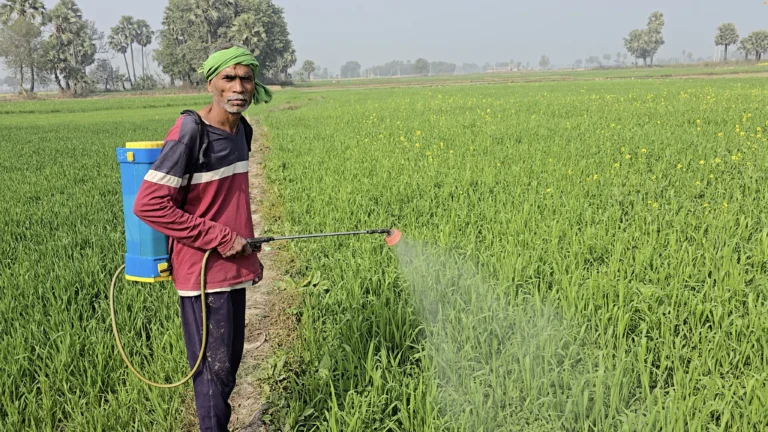
In the rural belts of Bihar, agriculture is entirely at the mercy of extreme weather. Sahpur Parsonda in the Bhojpur district is a prime example of this geographical challenge. This region is notoriously flood-prone; year after year, heavy monsoons wash away traditional farming setups. Because surface-level irrigation systems are consistently destroyed by floodwaters, farmers historically avoided investing in them, leaving massive tracts of land completely barren during dry spells.
Addressing this complex environmental challenge requires more than just temporary aid; it requires strategic engineering. This is where Bhartiya Jan Utthan Parishad (BJUP) has stepped in as a pioneering Climate-Resilient Agriculture NGO in Bihar, executing a permanent, sustainable, and highly cost-effective solution.
The Intervention: A 1200-Meter Flood-Proof Irrigation Network
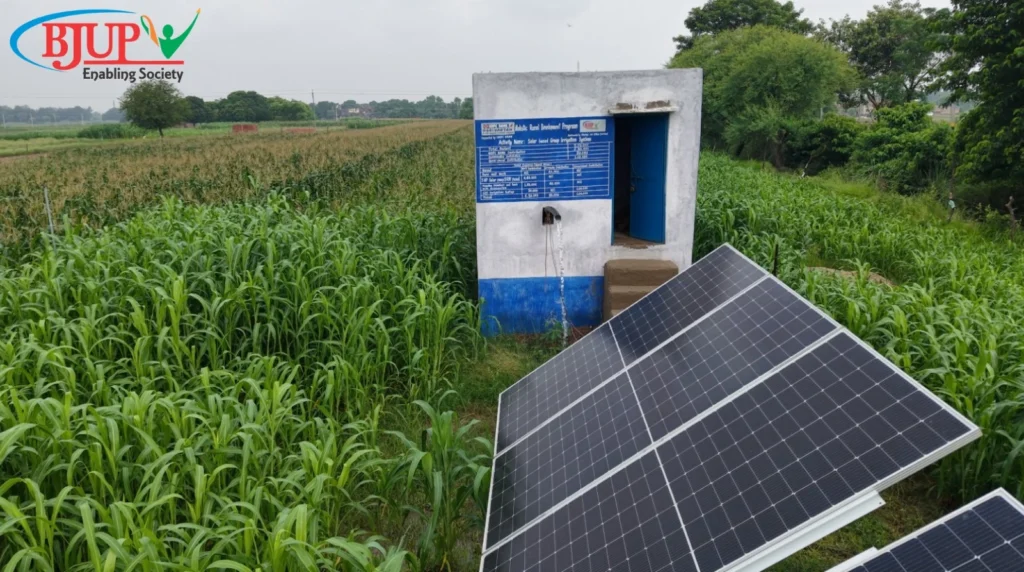
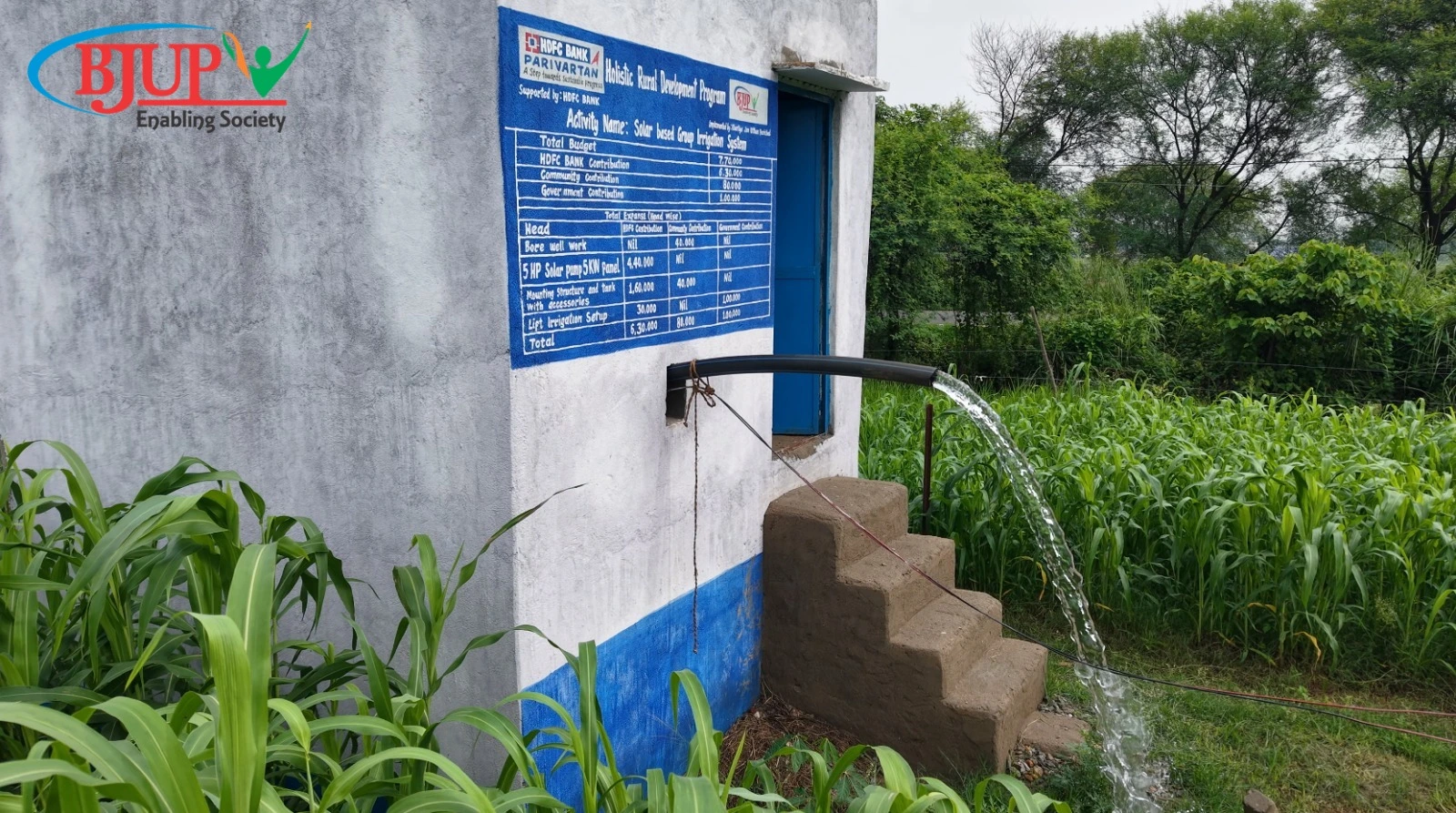
To solve the recurring destruction of agricultural infrastructure, BJUP implemented a robust, flood-resilient solar irrigation project in Sahpur Parsonda. Recognizing that traditional setups would not survive the next monsoon, the team engineered a specialized 1200-meter-long irrigation network designed to withstand local environmental extremities.
Powered by high-capacity solar panels, this system ensures that water is pumped and distributed efficiently across a vast area without relying on erratic electrical grids or expensive, polluting diesel generators. As a forward-thinking Climate-Resilient Agriculture NGO in Bihar, BJUP ensures that the technology adapts to the land, not the other way around.
A Masterclass in Cost-Efficiency and Scalability
What makes this project a gold standard for CSR implementation is its incredible cost-efficiency. Through strategic planning and localized engineering, BJUP successfully installed this 1200-meter irrigation framework at just 50% of the cost typically associated with similar large-scale agricultural projects.
Furthermore, this isn’t just a charity initiative; it is a self-sustaining business model for the community. The water distributed through this system generates nominal, community-managed revenue. Instead of relying on external funds for maintenance, this generated revenue is strategically reinvested to expand the network further. This cyclical financial model is exactly why corporate partners trust BJUP as a highly scalable Climate-Resilient Agriculture NGO in Bihar.
The Visual Proof: A Tale of Two Fields
The true impact of this initiative doesn’t require a spreadsheet to understand—it is visible to the naked eye. Standing at the project site in Sahpur Parsonda, the contrast is stark and immediate.
The Visual Proof
how successfully this system has transformed a flood-ravaged wasteland into an agricultural haven.
[Watch the Transformation] See the stark contrast and the 1200-meter system in action directly from the fields of Sahpur Parsonda: (Watch the Full Video Here)
Partner With Us to Scale Climate-Smart Solutions
The success in Bhojpur proves that with the right technology and community management, even the most difficult terrains can become highly productive.
Corporate entities, ESG funds, and philanthropic organizations seeking a transparent, data-driven, and highly effective Climate-Resilient Agriculture NGO in Bihar will find a proven partner in BJUP. Supported by major CSR initiatives, our ground-level engineering turns philanthropic investments into permanent, scalable community assets. Join us in expanding this 1200-meter lifeline to neighboring villages, ensuring that no farmer in Bihar is left at the mercy of the changing climate.